We are a local pickup only nursery. Please select location at checkout.
Honey Petal Plants
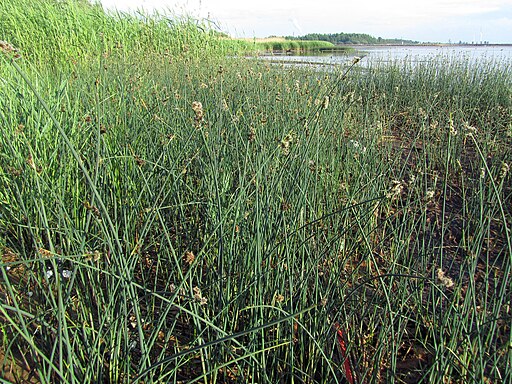
Schoenoplectus tabernaemontani - Soft-stem Club-bulrush
Schoenoplectus tabernaemontani - Soft-stem Club-bulrush
Couldn't load pickup availability
Sizes available: TBD
Basics: zones 4-9, 3-9' (quite variable) x 1-5' (quite variable), full to part sun, blooms in summer, wants saturated soil (some sources say 1-3' of standing water). This is an obligate wetland species. Tolerates brackish water.
Common names: Soft-stem Club-bulrush, Soft Stem Rush, Great Bulrush, Grey Club-rush, Softstem Bulrush
Synonyms: Scirpus tabernaemontani, Scirpus lacustris
Family: Cyperaceae
Origin/Distribution: According to the Lady Bird Johnson Wildflower Center the current distribution in the U.S. is all 50 states. Its native distribution is from Newfoundland both west to northern California and Alaska, and south down the Atlantic coast to Florida and into Central America. This plant is native to Europe, most of Asia including Japan and as far north as Siberia, North Africa, and parts of South America. It has also been introduced in other countries such as New Zealand and Namibia. Native to Maine.
Habitat: Found in still and slow-moving water, tidal estuaries, the edges of marsh, lake, pond. Also on wet prairie and fen and in wet ditches.
More: Has edible parts, has been used medicinally and as a weaving material. Juglone and salt tolerant. More information coming soon.
Grasses are important habitat for native bees who use them for nesting material as well as for hibernation and nursery structures. Do not cut your grasses all the way to the ground. If you must, cut back to about knee height and leave the old stems in the clump permanently. The new growth will cover them over in no time and they will eventually rot away. Many bees have a lifecycle longer than one year and need dependable, consistent habitat to complete their journey. This cutting regime is applicable to other perennials with hollow stems, as well: cut back to knee height. It will look as intentional as cutting lower, but offer much richer habitat.
Source: sown at Honey Petal Plants with seed from Toadshade Wildflower Farm
Image credits: Wikimedia Commons