We are a local pickup only nursery. Please select location at checkout.
Honey Petal Plants
Rhus copallinum var. copallinum - Winged Sumac
Rhus copallinum var. copallinum - Winged Sumac
Couldn't load pickup availability
Sizes available: HPP quart
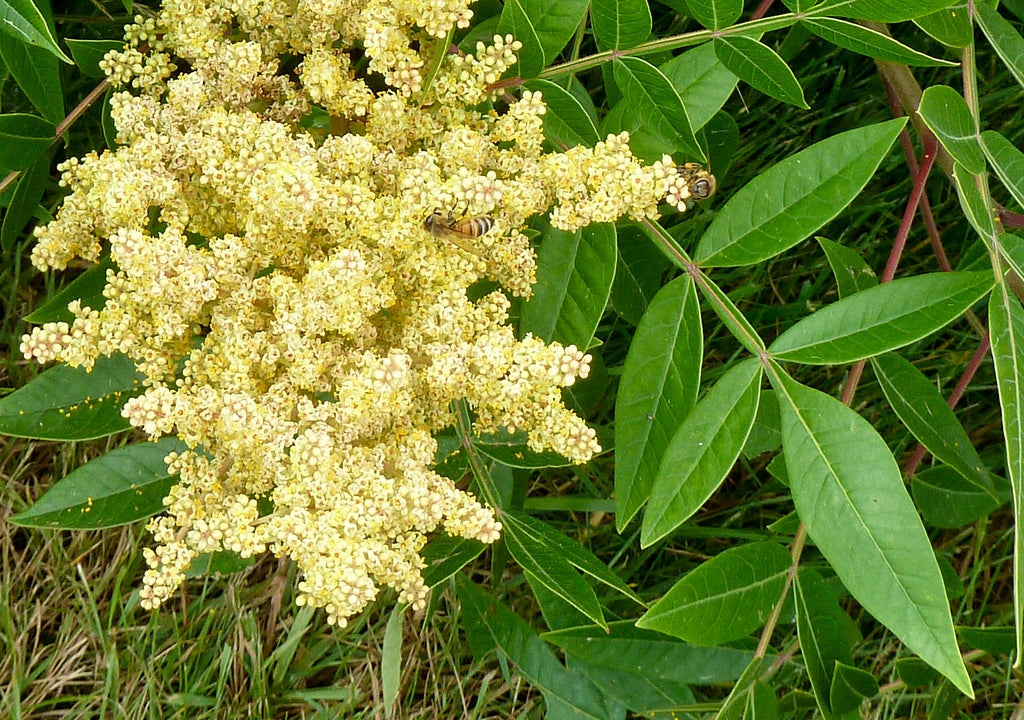
Basics: zones 4-9, can get as tall as 15-20' and form a large thicket, however, is very amenable to pruning, full sun to part shade, the large clusters of pale yellowish-green/ivory flowers (somewhat larger on the male plants, but spectacular on both) bloom in summer and ripen to dark red berries on the females, likes average to dry sandy, rocky, lean soils. Is very drought tolerant and almost always dioecious.
Common names: Winged Sumac, Dwarf (?) Sumac, Flameleaf Sumac, Shining Sumac, Eastern Winged Sumac
Family: Anacardiaceae
Origin/Distribution: This variant of Rhus copallinum is not native to Maine, but is native to the rest of New England. The variant native to Maine is Rhus copallinum var. latifolia. The ranges of both variants overlap, with Rhus copallinum var. latifolia having a wider range.
Habitat: Found in well-drained, open areas such as meadows, fields, and slopes. Also found in roadside and woodland edge habitats that are on the drier side and dry woods.
More: This extremely accommodating plant can be grown as a shrub or small tree as it takes well to pruning. If left to its own devices it is thicket-forming in its happy places and I honestly think you could drive a tractor trailer over it to little ill effect. For something so tough, I find it very charismatic. The flowers are showy and attractive to pollinators. It is great for erosion control and is salt tolerant. The leaves, berries, and bark have been used medicinally. The bark and leaves are high in tannins and have been used in the tanning industry. The sour berries from female plants will be eaten by some mammals and birds, and have been used by humans to make a lemon-y tasting beverage. Provides excellent cover for all manner of fauna and the leaves have a beautiful red fall color. The berried twigs of female plants are good for large fall arrangements and look majestic standing at the top of the shrubs in winter. I have always wanted to cut a hidden room in a sumac thicket. Perhaps you like that idea, too.
Source: sown at Honey Petal Plants with seed from Toadshade Wildflower Farm
Image credits: Flower panicle courtesy of Wendy Cutler via Creative Commons through the North Carolina Extension Gardener Plant Toolbox.