We are a local pickup only nursery. Please select location at checkout.
Honey Petal Plants
Parthenium integrifolium - Wild Quinine
Parthenium integrifolium - Wild Quinine
Couldn't load pickup availability
Sizes available: One gallon
Basics: zones 4-8, full sun to light shade, 2-5' x 1-2', numerous fuzzy, white flowers on a flat-topped branching structure in mid to late summer, likes medium moist to medium dry well-drained conditions, not picky as to soil type or pH.
Common names: Wild Quinine, American Feverfew
Origin/Distribution: From Maryland West to southeastern Minnesota and south to Georgia, Alabama, and Arkansas. This plant is naturalizing in Massachusetts and Connecticut and is probably an herb garden escapee.
Habitat: Found in fields, prairies, meadows, sun to part-shade edge habitat, and dry open woodland
More: This is a very adaptable, non-fussy perennial. Bees, wasps, flies, and beetles will visit for the pollen and nectar. The root, leaves, and tops have been used medicinally and this was used during WWI as a substitute for Cinchona bark (Quinine) to treat malaria. Makes a good cut flower, fresh or dried, and has a graphic presence standing in your winter garden. Is deer and rabbit resistant. May cause contact dermatitis.
Source: Honey Petal Plants
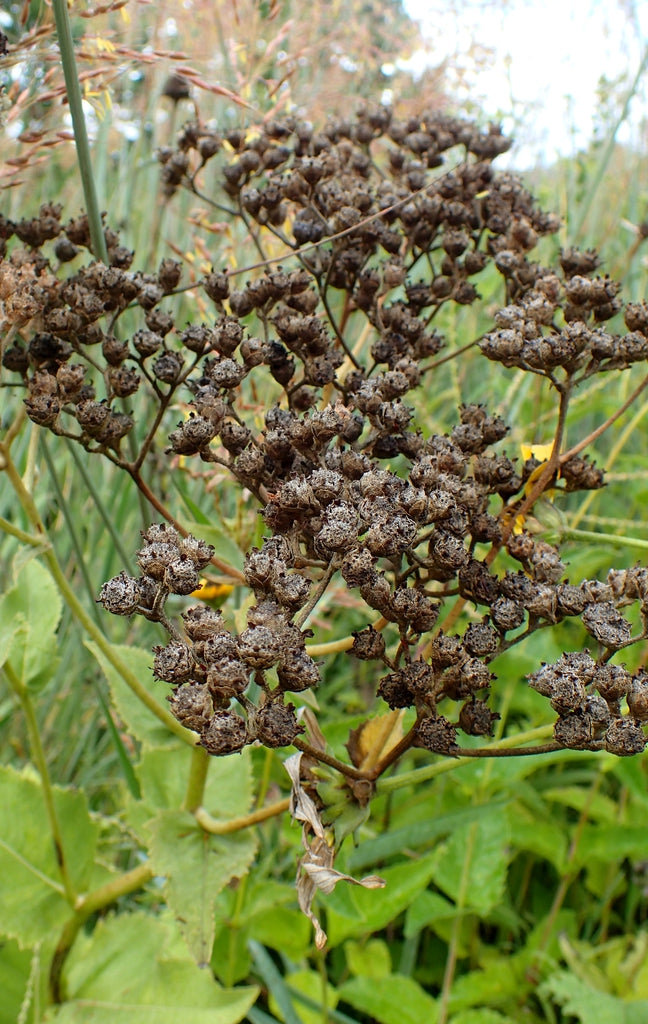
Image credits: Flowerhead via Peterchen; Plant in situ starting to set seed and seed head via Krzysztof Ziarnek - all three images via Creative Commons and found through the North Carolina Extension Gardener Plant Toolbox. I am ever grateful for these shared resources.