We are a local pickup only nursery. Please select location at checkout.
Honey Petal Plants
Eutrochium maculatum - Spotted Joe-Pye Weed
Eutrochium maculatum - Spotted Joe-Pye Weed
Couldn't load pickup availability
Sizes available: #1 (Trade gallon), looking a bit stressed from container life, but good, healthy roots.
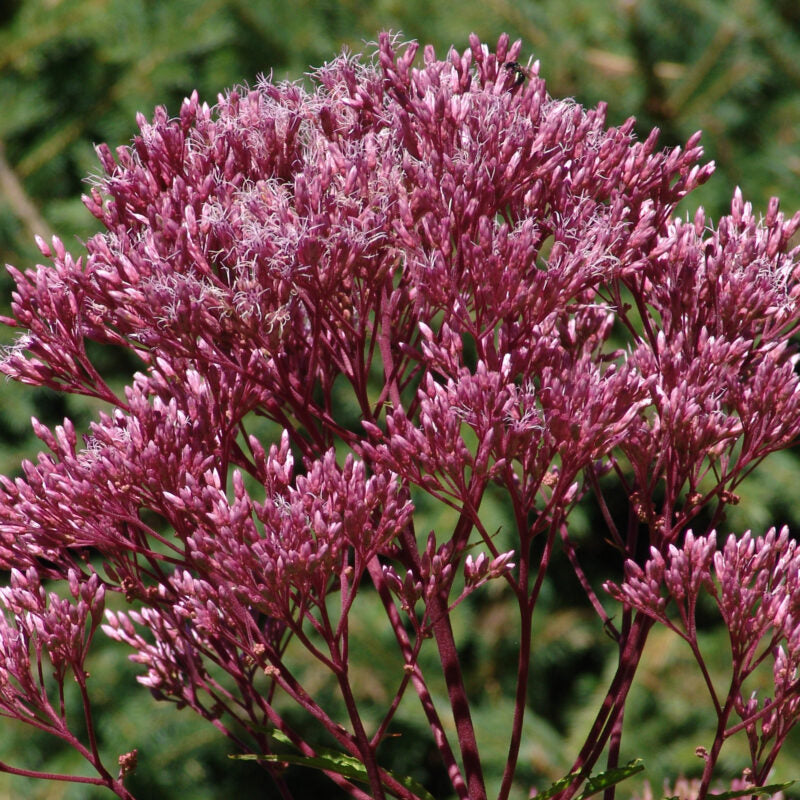
Basics: zones 3-8, 36-72" x 36-72", full sun, the purply-mauve, large, fluffy bloom is comprised of numerous small flowers, blooms in mid-late summer, likes consistent moisture to considerably wet soils.
Common names: Spotted Joe-Pye Weed, Spotted Trumpet Weed, Joe Pyeweed, Joe Pye Weed, Queen of the Meadow (many other plants have this common name, probably depends on whose reign is in the ascendency).
Synonyms: Eupatorium maculatum, Eupatorium purpureum var. maculatum
Family: Asteraceae
Origin/Distribution: According to Go Botany this plant exhibits wide morphological variability and a wide distribution. The Lady Bird Johnson Wildflower Center says it is present in 36 states and 10 Canadian provinces. It is native to Maine and these plants were grown from seed collected in New England.
Habitat: low, wet places in fields and meadows, wet margins - as on edges of lakes, rivers, marshes, fens, swamps, etc. and in drainage ditches
More: Spotted Joe-Pye Weed is slow to wake up in the spring. It is a statuesque plant that works well at the back of a border or growing in conjunction with other strong growers like Helenium, Ironweed, Tall Coreopsis, New England Aster, and Wild Bergamot. If its height feels oppressive to you, cut it back by a third (or cut part of it back to stagger height) by the end of June. This delays flowering a bit, but softens the wall-like presence of the plant. Its fragrant, showy flowers bloom for a long time and provide nectar in the late part of the season. It stands well in the winter. It is a larval host for 27 species of caterpillars that occur in Maine. A few are Haploa clymene, the Clymene Moth, Synchlora aerata albolineata, the Wavy-lined Emerald, Phragmatobia fuliginosa, the Ruby Tiger Moth and two species of Dart moths: Feltia subgothica,the Subgothic Dart, and F. tricosa, the Tricose Dart. Leaf beetles and aphids enjoy sucking on the plant's juices. Has been used medicinally. Deer and rabbit resistant. Salt tolerant. Good cut flower for large arrangements.
Even more: The hollow stems of numerous plants, and E. maculatum is one are a boon for over-wintering insects who shelter and/or lay their eggs in them. Instead of cutting old stems to the ground, consider leaving them at about knee height to serve this important purpose. Because of the life cycles of various insects are longer than a single season, you want to leave them permanently intact. Don't cut them back in the spring, but have confidence that the flush of strong new growth from the plant will quickly over-take and conceal this lower framework, which then can continue to offer the opportunity for shelter and an insect nursery!
Source: Van Berkum Nursery, grown from seed collected in New England
Image credits: Van Berkum Nursery (usually a bit paler than this)