We are a local pickup only nursery. Please select location at checkout.
Honey Petal Plants
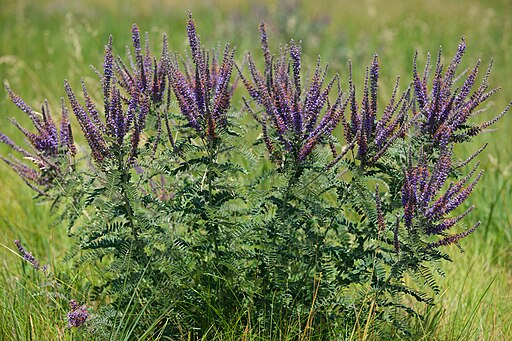
Amorpha canescens - Leadplant
Amorpha canescens - Leadplant
Couldn't load pickup availability
Sizes available: HPP #1
Basics: zones 2-8, 2-3' x 1-3', full to part sun, numerous very small reddish-purple tubular flowers bloom in spikes over shrubby structure in mid to late summer, likes medium to dry, lean, sandy or rocky soil.
Common names: Lead Plant, False Indigo, Devil's Shoestrings, Prairie Shoestring, Buffalo Bellows, Downy Indigo Bush
Family: Fabaceae
Origin/Distribution: Found in southern Canada down into Indiana, southeast Michigan, and west to parts of Montana, then further south into Arkansas, Texas, and New Mexico.
Habitat: Occurs on well-drained prairie and bluff, and in woodland openings and dry, open uplands.
More: This deciduous subshrub is a nitrogen-fixer sporting the typical vetch-like herbage of members of the pea family. It is slow to get going, as many tap-rooted plants are, and it is slow to get started in the spring, so don't dig it out prematurely. Can take to hard pruning (trim back to just above new buds). Very attractive to pollinators. And also attractive to this gardener, who wonders if this might make a good cut flower. Larval host to the Eastern Tailed Blue, Cupido comyntas, and the Silver Spotted Skipper, Epargyreus clarus, both native to Maine and whose caterpillars feed on legumes. This will look good with other plants that like a dry grassland setting such as Echinacea pallida, Monarda punctata, Schizachyrium scoparium, and Liatris aspera. I would be inclined to try it for a spot of larger structure in a sunny rock garden, too. Has been used medicinally. New growth may be subject to browsing.
Source: via Prairie Moon Nursery as 3" plants, 2026 - grown on to larger size at Honey Petal Plants
Image credits: Wikimedia Commons