We are a local pickup only nursery. Please select location at checkout.
Honey Petal Plants
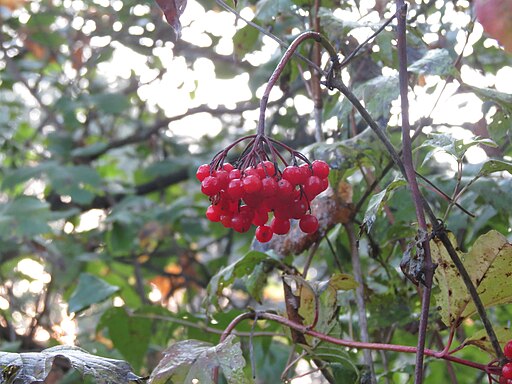
Viburnum opulus var. americanum - Highbush Cranberry
Viburnum opulus var. americanum - Highbush Cranberry
Couldn't load pickup availability
Sizes available: #1 (Trade gallon), perhaps ready in fall, 2026
Basics: zones 2-7, 6-15' x 8-12', full sun to part shade, (will berry most abundantly with plenty of sun), a pretty lacecap of white small flowers blooms in the spring followed by bright red fruit (drupes), usually found in consistently moist soil but is adaptable.
Synonyms: Viburnum trilobum, Viburnum opulus subsp. trilobum
Common names: Highbush Cranberry, Guelder Rose, Crampbark, American Cranberry Bush, Dog Rowan, Gatten, Whitten Tree, Ople Tree, Snowball Tree, Witchhopple, Gadrise - plants.usda.gov lists 23 different common names for this plant which indicates to me both a wide distribution and a deep cultural resonance with humans.
Family: Adoxaceae (Caprifoliaceae)
Origin/Distribution: Native to a large swath of North America from British Columbia south to Washington state and east to Newfoundland, then south to northern Virginia. This plant is rare in Pennsylvania and under threat in Indiana and Ohio. Native to Maine.
Habitat: Occurs in a variety of damp places including open woodland, pasture, thicket, and the margins of bog, marsh, lake, pond, etc. It also grows on moist, wooded slopes.
More: Highbush Cranberry is one of our many beautiful native Viburnums. It has been used medicinally and contains a strong anti-spasmodic. The fruit is harvested when slightly underripe and can be eaten raw or cooked and can be used to make sauces, jellies, juice, liquor, and wine as well as in pies. Small mammals and various birds including turkeys, grouse, robins, and cedar waxwings eat the berries, but they often remain untouched until the weather has put them through several freeze/thaw cycles. Twigs are browsed by deer, beaver, and moose. It is important to protect young specimens from browse until well established. The non-native Viburnum Leaf Beetle, Pyrrhalta viburni, will feed on our native Viburnums. The egg cases are easy to spot in the winter and can be gently scraped off the bark. This insect won't kill your plant unless the infestation is severe and on-going.
Even more: Viburnum opulus is a non-native viburnum that can cross with our native viburnums and has naturalized in parts of North America including Maine. It is challenging to distinguish this species from our native species. However, the fruit is not palatable, not harvested for human consumption, and the berries exhibit a higher toxicity. According to the Peterson Field Guide to Eastern/Central Medicinal Plants, V. opulus is a sometime garden escapee from Europe. It is also native to Northern Africa and Central Asia. The bark, leaves and fruit have a long history of medicinal use in its native range (see the Wikipedia entry for more). Our American Highbush Cranberry, which is closely related, has been used interchangeably with this species for medicinal purposes and has its own history of medicinal use in North America. See extension.umaine.edu for more information.
Source: Cold Stream Farm
Image credits: Wikimedia Commons