We are a local pickup only nursery. Please select location at checkout.
Honey Petal Plants
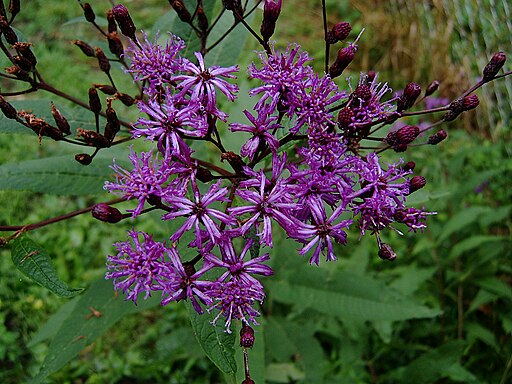
Vernonia gigantea - Giant Ironweed
Vernonia gigantea - Giant Ironweed
Couldn't load pickup availability
Sizes available: HPP #1, coming in 2026
Basics: zones 5-8 (or 4-9, depending on who you ask), 5-10' (more likely to top out at 8'), full to part sun (some say more shade), showy dark pinkish-purple blooms in late summer to early fall. likes fertile and consistently moist soil. Not particular as to soil type. Can take it quite wet, but this is not an absolute requirement.
Common names: Giant Ironweed, Tall Ironweed
Synonyms: Vernonia altissima
Family: Asteraceae
Origin/Distribution: Occurs from Ontario and New York south to Georgia, west to Louisiana, and north to Missouri, Illinois, and Michigan.
Habitat: Found on fertile, sunny floodplains and in riparian habitats and low, wetter spots in meadows and fields.
More: This is a good source of both nectar and seeds and is deer resistant. It is slow to get going, as many fall-bloomers are. Although its native habitats are usually wet to moist, this plant can take more averagely watered garden soil. It is a strong grower and will hybridize with other Ironweed species. The Denticulate Longhorn Bee, Melissodes denticulatus, is a specialist on Ironweeds. It has been sited as far north as midcoast Maine (iNaturalist), which is just out of its normal range. If this bee is migrating northwards (versus a single bee perhaps hitch-hiking on a nursery grown Vernonia and surviving for a while and getting photographed), planting Ironweeds, although not native to Maine, would be helpful to it. This plant is also a larval host for the American Lady, Vanessa virginiensis, and the Parthenice Tiger Moth, Apatensis parthenice, both of which occur in Maine.
Even more: Can be pruned by early July to bloom at a reduced height. Many late bloomers like Asters, Joe Pyes, and Vernonias take well to this regime. If desired, by selectively cutting back portions of a stand, you can reduce the blocky, wall-like edifice of large perennials and elongate the bloom time further into the fall. If you do this by July 4th weekend, the late bloomers still have time to develop flowers before the end of the season. In Britain this is called the "Chelsea Chop" because the timing to do it in their climate coincides with the Chelsea Flower Show.
Source: Honey Petal Plants
Image credit: Wikimedia Commons