We are a local pickup only nursery. Please select location at checkout.
Honey Petal Plants
Typha latifolia - Broad-leaved Cat-tail
Typha latifolia - Broad-leaved Cat-tail
Couldn't load pickup availability
Sizes available: TBD, coming in 2026
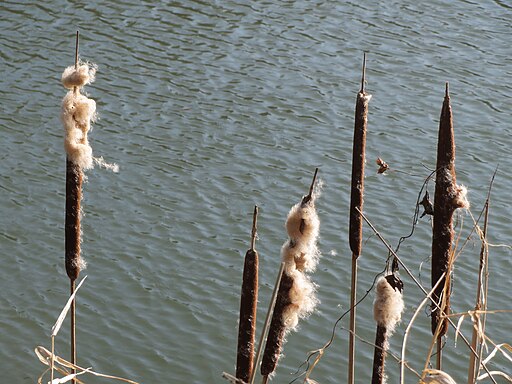
Basics: zones 3-10, 4-6' (maybe taller) x 4-6', full sun to light shade, the male blooms are at the top of the stalk. They are minute and yellow and after pollination, this part of the stalk disintegrates. The female flowers bloom below the male and after catching the wind borne pollen from the male flowers, they mature to form the velvety brown "cattail" that is emblematic of the species. Blooms in late spring. Likes rich, wet mud.
Common names: Broadleaf Cattail, Cat-o-Nine-Tails, Bulrush, Common Cattail,
Family: Typhaceae
Origin/Distribution: Native to all of New England. This Cattail is native to practically all of North and South America as well as Africa and western Eurasia.
Habitat: This plant is found in freshwater marshes and bogs and on riparian edges where it is constantly wet but is transitioning to a drier habitat. As long as the soil is consistently wet, they do not need standing water to grow and usually occur in water that is 8" or less in depth. The plant has evolved a leaf structure that enables it to transfer large amounts of oxygen to its submerged rhizomes.
More: Cattails offer shelter and nesting sites for waterfowl. Muskrats and beavers will feed on the young shoots and the roots. Some birds eat the seeds. Unless you have a large area to cover, grow this in a container that holds water but curtails spread. This will prevent it from dominating the entirety of your water garden. The numerous parts of the Cattail are edible and information about this alone could make a very long entry. The plant has also been used medicinally, but also has toxic properties. It has been harvested and processed for padding, flotation, roof thatch, woven mats, caulk, and adhesive. The cattails are a classic in dried flower arrangements. Remnants of this plant have been discovered in caves in Ohio dating back to between 800-1400 A.D. and I will add to this entry as I learn more about this amazing plant.
Source: sown at Honey Petal Plants with seed from Toadshade Wildflower Farm
Image credits: #1 from Wikimedia Commons; #2 Bogdan Giusa via Creative Commons through the North Carolina Extension Gardener Plant Tooxbox; #3 cross-section of stem from Wikimedia Commons; #4 Typha latifolia at the end of the season from Wikimedia Commons