We are a local pickup only nursery. Please select location at checkout.
Honey Petal Plants
Swida sericea var. sericea - Red-osier Dogwood
Swida sericea var. sericea - Red-osier Dogwood
Couldn't load pickup availability
Sizes available: HPP #1
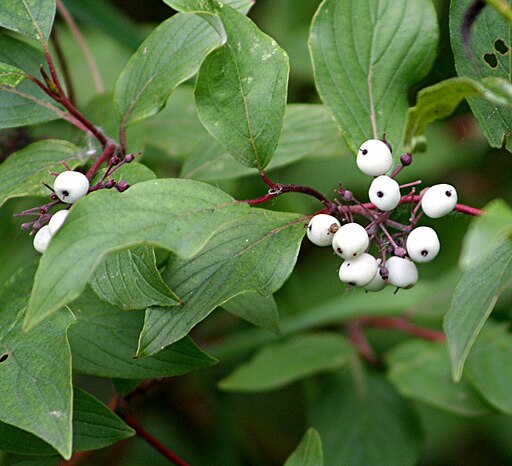
Basics: zones 2-7, 6-10' (occasionally up to 20') x 6-10', sun to part shade, white flowers in late spring develop white drupes (sometimes with a pale blue cast), medium to dark red stems in winter, moist to average soil conditions. Prefers early season saturation, but adaptable to drier soils as the season progresses.
Synonyms: Cornus sericea, Cornus stolonifera
Common names: Red Twig Dogwood, Red-osier Dogwood, Redstem Dogwood, Ruby Dogwood, Red-stemmed Cornel, Red Willow, Creek Dogwood
Family: Cornaceae
Origin/Distribution: According to the Ladybird Johnson Wildflower Center, Swida sericea is present in 8 Canadian Provinces and 35 states. It has also been introduced and is naturalizing in parts of Europe and Great Britain. Native to Maine.
Habitat: Found in seasonally saturated soils, but not perpetually standing water. Occurs in roadside ditches and at the edges of lakes, ponds, and streams.
More: The striking red stems of this deciduous shrub are a common sight along the damp roadside ditches in Maine in the fall and winter. Red Twig is a larval host for the Spring Azure, Celestrina ladon, which is native to Maine, and the spring blooms are an early food source for pollinators including beetles, flies, and solitary bees. This shrub may be browsed by moose, beaver, and deer, but is easy to propagate, so get a lot going and there will be enough for everyone. Provides shelter and nesting sites for numerous birds, and over 30 bird species, as well as small mammals, eat the berries.
Even more: Considered a sacred plant in many indigenous cultures. As with Black Elderberry (and as I wrote in that plant's entry) it is customary to ask permission and give thanks prior to harvest. I am dedicated to developing my relationships with plants, and practicing respect and appreciation for them feels not only natural, but important to me at a gut level. Perhaps to you, too?
The bitter, raw berries, consumed a few at a time are considered tonic and the bark has also been used medicinally. The inner bark and sometimes the leaves have been used in tobacco mixtures. The stems are one of the materials traditionally used to make dream catchers. The wood has also been used to make arrows, bows, and stakes, and as a basket-weaving material. Takes well to hard-pruning and coppicing and can be easily rooted from fresh-cut twigs poked into damp ground. The youngest twigs exhibit the brightest fall color. The inner bark, in combination with minerals and other plant materials, can be used to make dyes of various colors. If livestock has access to this plant, it is possible over-grazing will occur to the point of changing the ecosystem relationships dependent upon the dogwood. Potentially a strong grower and good for erosion control and hedgerows. There are numerous cultivars of this plant developed for stem color, form, and leaf variegation. For more information on the species, refer to the comprehensive entry at plants.usda.gov.
Source: bare root plants from Cold Stream Farm (if you have a pal with this plant available, ask to cut some 12" twigs (and stick them in wet ground, right-side up)
Image credits: Botanical illustration attributed to Johan Carl Krauss from Wikimedia Commons; the flowers (by Tom Brandt) and the red stem close-up (by Matt Lavin) are via Creative Commons through the North Carolina Extension Gardener Plant Toolbox; the berry image is from Wikimedia Commons