We are a local pickup only nursery. Please select location at checkout.
Honey Petal Plants
Spiraea tomentosa - Steeplebush
Spiraea tomentosa - Steeplebush
Couldn't load pickup availability
Sizes available: #1 (Trade gallon), coming later in 2026
Basics: zones 3-8, 2-4' x 3-5', full sun for best bloom, numerous tiny pink flowers in 4-8" terminal spikes in mid to late summer, likes moist, acidic soil with good drainage. Prefers consistent moisture.
Common names: Steeplebush, Hardhack, Meadowsweet, Eastern Hardhack
Family: Rosaceae
Origin/Distribution: Nova Scotia and New Brunswick over to Quebec and eastern Minnesota south to North Carolina, Mississippi, and Arkansas. Native to Maine.
Habitat: damp meadow, wet margins like bog and marsh edge, low pasture, roadside ditch
More: This is a multi-stemmed shrub that can spread via suckers and responds well to pruning. The more sun and consistent moisture the plant gets, the happier it will be. It flowers on new wood, so can be pruned hard in late winter to early spring without loss of flowers. This makes it a good candidate for shrubberies under rooflines where excessive snow may slide off onto plantings. The leaves and flowers have been used medicinally. It has yellow fall foliage and I look forward to learning if it will be a good bouquet ingredient. Although it may have a bit of deer browse, its bitter flavor discourages significant munching. Steeplebush is a larval host for the New England Buck Moth, Hemileuca lucina, and the Columbia Silk Moth, Hyalophora columbia, both of which are native to Maine. Numerous bees feed on the flowers including these Maine natives: the Brown-belted Bumblebee, Bombus griseocollis, the Common Eastern Bumblebee, Bombus impatiens, the Mesilla Masked bee, Hylaeus mesillae, and the Sweat bees Lasioglossum atwoodi and L. hitchensi. The shrub serves as a breeding ground for the Obscure Plant bug, Plagiognathus fuscosus and the non-native European honeybee, Apis mellifera, will also feed on the plant.
Source: sown at Honey Petal Plants with seed from Toadshade Wildflower Farm or Prairie Moon Nursery
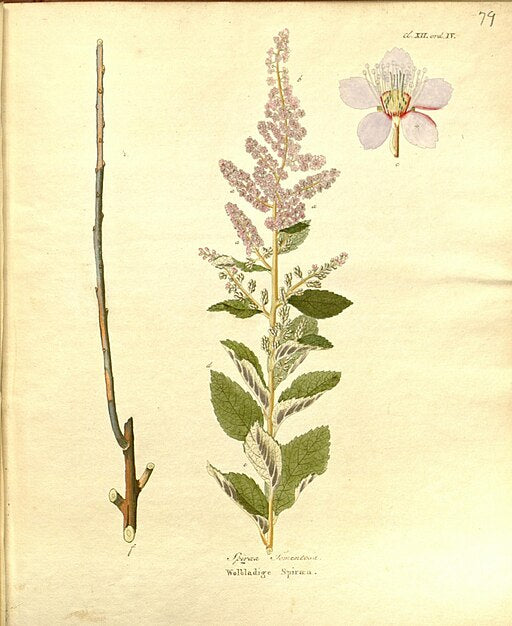
Image credits: image of flowers courtesy of RockerBoo via Creative Commons through the North Carolina Extension Gardener Plant Toolbox; botanical illustration from Wikimedia Commons