We are a local pickup only nursery. Please select location at checkout.
Honey Petal Plants
Phytolacca americana var. americana - Pokeweed
Phytolacca americana var. americana - Pokeweed
Couldn't load pickup availability
Sizes available: TBD, coming in 2026
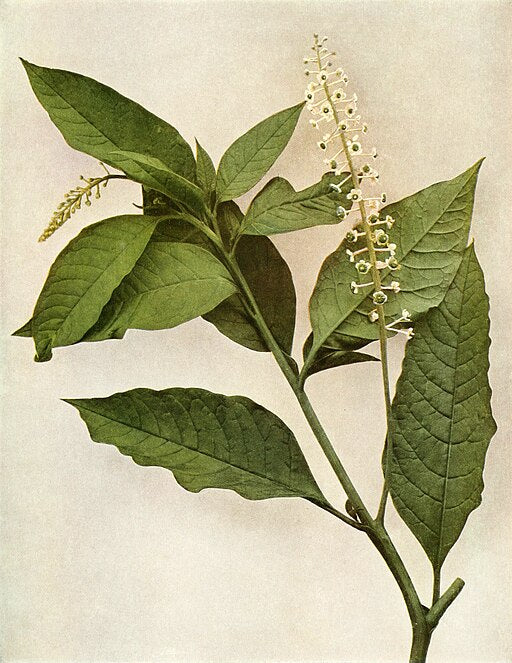
Basics: zones 4-8, 4-10' x 2-3', full sun to part shade, greenish white flowers ripening to almost black berries attached to a dangling raceme by pink pedicels, blooms spring into fall and the blooms and berries can be present simultaneously, medium water use, not too nutritious a soil is preferred.
Common names: Pokeweed, American Pokeweed, Common Pokeweed, Garnet Pidgeon Berry, Poke, Pokeberry, Polk Salad, Poke Sallet, Dragonberries, Scoke, Redweed, Red Ink Plant, Pidgeonberry Weed, Inkberry, Lorraine's Punk Rock (my new common name, see below)
Family: Phytolaccaceae
Origin/Distribution: Native to 39 states. Has been introduced and has naturalized in the western U.S. as well as parts of Europe and Asia including Japan. Native to Maine.
Habitat: Occurs in edge habitats, pastures, recently disturbed land, woodland openings, waste areas, railroad and roadsides, fence rows.
More: All parts of this plant are poisonous, however, the leaves, berries, and root have been used medicinally and if properly prepared, the leaves are eaten as as a spring green without ill effect. May also cause contact dermatitis. This plant can be confused with Veratrum viride, American White Hellebore, which is fatally toxic. Proceed with caution. There is so much to say about this plant. More information coming soon.
Even more: This is a punk rock plant extraordinaire, and my name for it, Lorraine's Punk Rock, is in honor of my dear friend Lorraine Kennedy who was a punk rocker until the very end. I think more songs should be written about this plant. We have the excellent "Polk Salad Annie" written in 1968 by Tony Joe White and popularized by the secret punk rocker Elvis Presley, but there is room for more.
Source: sown at Honey Petal Plants with seed from Toadshade Wildflower Nursery
Image credits: The close-up of the berries is crom Tubifex and the image of the plant in all its glory is from Cathy Dewitt. Both of these are via Creative Commons through the North Carolina Extension Gardeners Plant Toolbox. The botanical illustration is from Wikimedia Commons.