We are a local pickup only nursery. Please select location at checkout.
Honey Petal Plants
Lysimachia lanceolata var. purpurea - Lance-leaved Loosestrife selection
Lysimachia lanceolata var. purpurea - Lance-leaved Loosestrife selection
Couldn't load pickup availability
Sizes available: #1 (Trade gallon)
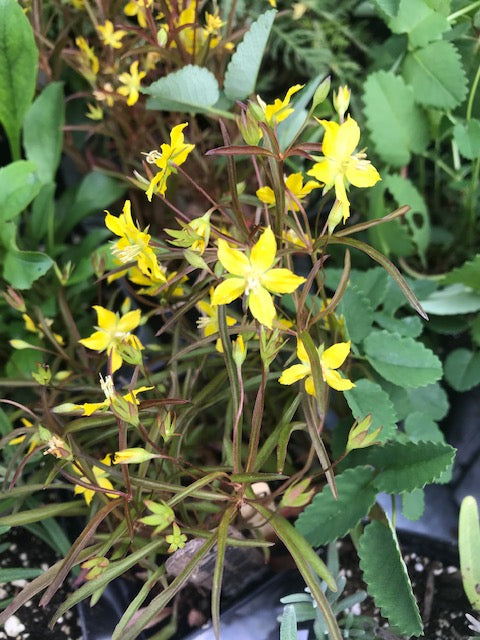
Basics: zones 4-9, 12-24" x 18", full sun to part sun, to high, dappled shade, charming, dainty yellow blooms above lacy, green and reddish-bronze foliage in early summer and then intermittently into early fall, wet to moist to average soils, adaptable as to soil type.
Common names: Lance-leaved Loosestrife selection
Family: Primulaceae
Origin/Distribution: eastern and central North America
This is a naturally occurring selection of the species and frankly, should be included in the Maine native plants category. However, there is so much misunderstanding (confusion sometimes bordering on panic) as to selections, cultivars, hybrids, seed-grown, local ecotype, landrace, clone, etcetera (blog posts hopefully coming this winter), that I am relegating it to non-native status. This is an excellent plant either way.
Habitat: woodland edges, moist slopes in deciduous woods with high, light shade, also consistently moist areas in full sun
More: Some Lysimachia species produce floral oil, not nectar, and are used by the oil-collecting bees in the genus Macropis. Lysimachia lanceolata var. purpurea is one of these oil producers. The two species of oil-collecting bee, Macropis nuda and Macropis patellata occur in Maine. These tiny bees line their nests with the fragrant oil from Lysimachia flowers and use it to feed their larvae. And that's not all! These bees are parasitized by the Macropis Cuckoo Bee, Epioloides pilosulus, which is also native to Maine. We don't need to go into gory detail right now, but it's a tough world out there, so buck up and help the food chain in all its disturbing, messy glory.
As far as for the joy of the gardener, this is a plant you always want to invite to the party. It creates a lovely, airy living mulch, is tolerant of various conditions, and in order to help out our oil-collecting bees, and their parasitizers, you need to plant a large patch. It also makes a pretty addition to smaller bouquets.
Source: Landscape plugs from North Creek, grown on at Honey Petal Plants
Image credit: Honey Petal Plants, a young plant already happily blooming away. Check out that foliage!
