We are a local pickup only nursery. Please select location at checkout.
Honey Petal Plants
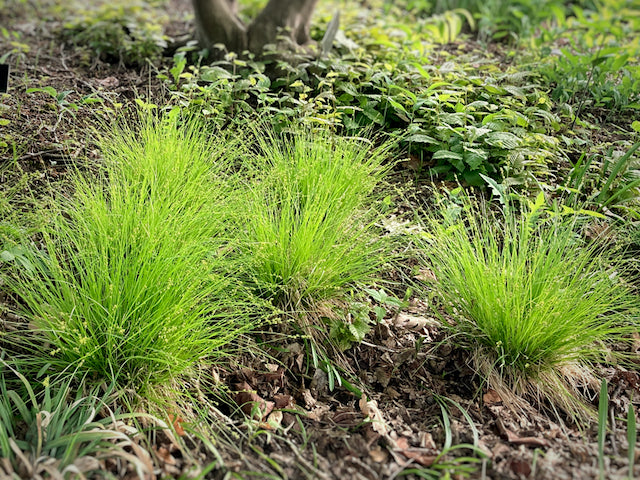
Carex rosea - Rosy Sedge
Carex rosea - Rosy Sedge
Couldn't load pickup availability
Sizes available: HPP quart
Basics: zones 3-9, 12" x 12", part sun to full shade, the bloom is a very cute, green, star-like spikelet in mid to late spring, medium wet to dry soils, but drought tolerant especially in shade. In brighter light it will not fare well unless the soil is consistently moist.
Common names: Rosy Sedge, Curly-styled Wood Sedge, Golden Star Sedge
Family: Cyperaceae
Origin/Distribution: central and eastern North America, native to Maine
Habitat: C. rosea's happy places are bright shade or part sun at a woodland edge, bottomland, shoreline of ponds or streams, and dry to moist deciduous woods, under oaks in particular.
More: Cover for small mammals, amphibians, and ground-nesting birds. Sedges offer lovely grass-like textures in a matrix with other low-growing shade perennials and are deer and rabbit tolerant. Cut back in late winter before new growth begins. Carex rosea is closely related to Carex radiata and both often grow in association with oaks. Although Carex rosea is more often found on drier sites with Quercus alba, Q. rubra, or Q. macrocarpa and Carex radiata favors wetter sites and Quercus bicolor, they are also often found growing together.
Even more: If I could talk more gardeners into filling their spaces with Carex species, I would consider my life well lived. They are an excellent ground cover layer and there are species for every conceivable light and moisture condition. Some of them also make good lawn alternatives. They can be planted under trees, shrubs, and taller herbaceous layers, acting as living mulch, retaining moisture and suppressing weeds and looking good doing it. They offer top notch habitat for wildlife, providing shelter and food for birds, small mammals, and invertebrates, and acting as larval hosts for numerous species. Their fibrous root systems are good at holding banks, slopes, and edges. For the most part they are deer and rabbit tolerant. And last but not least, they provide structural backbone - variations in texture, color, and rhythm - to your ornamental beds.
Source: Landscape plugs from North Creek, grown on at Honey Petal Plants
Image credits: Frank Meuschke of Shelterwood Gardens
