We are a local pickup only nursery. Please select location at checkout.
Honey Petal Plants
Carex laxiculmis - Spreading Sedge
Carex laxiculmis - Spreading Sedge
Couldn't load pickup availability
Sizes available: #1 (Trade gallon), landscape plugs are also available, please contact the nursery
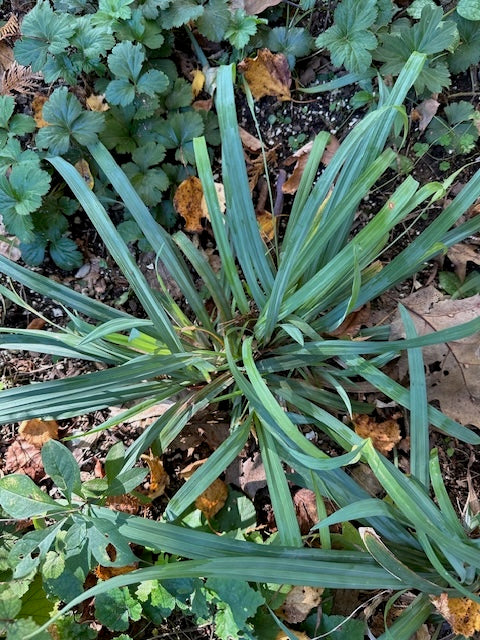
Basics: zones 4-9, 6-12" x 12", part to full shade, small flower spikes in late spring, the blade-like, arching leaves have a blue-green cast, likes moist woodland soils on the alkaline side, but I think its pretty adaptable
Common names: Spreading Sedge, Creeping Sedge, Glaucous Woodland Sedge
Family: Cyperaceae
Origin/Distribution: In the U.S the range is from Maine to Florida and West to Minnesota and Arkansas. It is also native to Ontario and Quebec. Native to Maine
Habitat: moist woods and woodland edge, stream banks, swamp margins. According to Go Botany this sedge is characteristic of evergreen and mixed deciduous forests in New England and is often found near seeps or at a stream edge.
More: a gradual spreader through underground rhizomes, an attractive player in a woodland garden intermingled with ferns, Phlox divaricata 'May Breeze' and Heucheras like 'Dale's Strain' and 'Green Spice'. This one is particularly good for a more tailored setting. Sedges are excellent living ground cover and provide cool, moist shelter for numerous invertebrate species. Deer and rabbit resistant. Although this one occurs in natural habitats on the wetter side, I have found it does well in the shade with a moderate amount of moisture.
Even more: If I could talk more gardeners into filling their spaces with Carex species, I would consider my life well lived. They are an excellent ground cover layer and there are species for every conceivable light and moisture condition. Some of them also make good lawn alternatives. They can be planted under trees, shrubs, and taller herbaceous layers, acting as living mulch, retaining moisture and suppressing weeds and looking good doing it. They offer top notch habitat for wildlife, providing shelter and food for birds, small mammals, and invertebrates, and acting as larval hosts for numerous species. Their fibrous root systems are good at holding banks, slopes, and edges. For the most part, they are deer and rabbit resistant. And last but not least, they provide structural backbone - variations in texture, color, and rhythm - to your ornamental beds.
Nursery: Grown from cuttings at Honey Petal Plants
Image credit: Honey Petal Plants
