We are a local pickup only nursery. Please select location at checkout.
Honey Petal Plants
Carex crinita var. crinita - Fringed Sedge
Carex crinita var. crinita - Fringed Sedge
Couldn't load pickup availability
Sizes available: TBD, coming in 2026
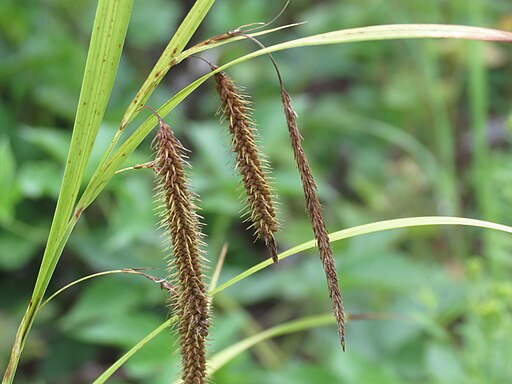
Basics: zones 3-8, 1-3' x 1-2', full sun to part shade, spikelets of green flowers in late spring to early summer turning brown when ripe, medium to wet soils, and much prefers consistent moisture.
Common names: Fringed Sedge
Family: Cyperaceae
Origin/Distribution: Wide distribution in eastern North America. Native to Maine
Habitat: Riparian: stream, lake, pond, wetland edge, wet ditches, low damp spots
More: This is a pretty sedge with attractive dangling spikelets that may work well in the vase, providing movement and texture. I will let you know. A cool season sedge that is deer resistant and although it is found in riparian environments, can do well in a garden, especially in some shade, as long as it does not dry out. Or, grow it as part of a container water garden. Good for erosion control on wet edges and will spread by rhizome. Can take occasional standing water. This sedge supports the Marsh Eyed Brown, Satyrodes eurydice, a butterfly native to Maine, as well as Skippers, Poanes species, and Sedge grasshoppers, Stethophyma species, examples of which live in Maine as well.
Even more: If I could talk more gardeners into filling their spaces with Carex species, I would consider my life well lived. They are an excellent ground cover layer and there are species for every conceivable light and moisture condition. Some of them also make good lawn alternatives. They can be planted under trees, shrubs, and taller herbaceous layers, acting as living mulch, retaining moisture and suppressing weeds and looking good doing it. They offer top notch habitat for wildlife, providing shelter and food for birds, small mammals, and invertebrates, and acting as larval hosts for numerous species. Their fibrous root systems are good at holding banks, slopes, and edges. For the most part they are deer and rabbit resistant. And last but not least, they provide structural backbone - variations in texture, color, and rhythm - to your ornamental beds.
Source: sown at Honey Petal Plants with seed from Toadshade Wildflower Farm
Image credits: Wikimedia Commons