We are a local pickup only nursery. Please select location at checkout.
Honey Petal Plants
Amsonia tabernaemontana var. salicifolia - Willowleaf Bluestar
Amsonia tabernaemontana var. salicifolia - Willowleaf Bluestar
Couldn't load pickup availability
Sizes available: Available later in 2026
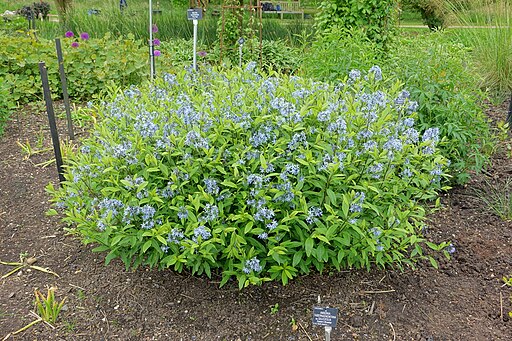
Basics: zone 3-9, 24-36" x 24-36", full sun to part shade, light blue bloom in mid spring, foliage turns buttery yellow in the fall, medium water needs and is somewhat drought tolerant.
Common names: Willowleaf Bluestar, Eastern Bluestar
Family: Apocynaceae
Origin/Distribution: Native in the mid and central U.S. from Ohio and Virginia, south and west to Texas. Amsonia tabernaemontana has naturalized in southern Maine and central Massachusetts, but it is not native to New England.
Habitat: moist wood edge, slopes, open fields, along stream banks, in ditches.
More: This variant of the species exhibits narrower stems and potentially a more erect habit when grown in full sun. It received high points in the Amsonia trials at the Chicago Botanic Garden. Once established it has a shrubby feel and a long season of interest. It makes a good cut flower and I am also interested in trying out the yellow fall foliage in my arrangements. If a more formal shape is desired, cut back the stems by 1/3 to 1/2 after flowering. Can grow in part shade, but will be more lanky and potentially floppy as it reaches for the light. Deer and rabbit resistant. Visited by pollinators, including hummingbirds, carpenter bees, and various butterfly and moth species. The larvae of Coral Hairstreak, Satyrium titus, although usually feeding on plants in the Rose family (Rosaceae), also feeds on the foliage of Willowleaf Bluestar. This butterfly is listed as a Species of Special Concern in Maine. Like many species in the Dogbane family this plant produces a sap when the stems are cut that may cause contact dermatitis in some people.
Source: Landscape Plugs from New Moon Nursery
Image credits: Wikimedia Commons