We are a local pickup only nursery. Please select location at checkout.
Honey Petal Plants
Amelanchier laevis - Smooth Serviceberry
Amelanchier laevis - Smooth Serviceberry
Couldn't load pickup availability
Sizes available: TBD
Basics: zones 4-8, 15-40' x 15-40' (canopy), but usually more like 25' in height at maturity, sun to part shade (will flower best in brighter spots), early spring bloom, white flowers from pink buds, fruit ripens in early summer, moist, well-drained soil, not drought tolerant.
Common names: Smooth Serviceberry, Smooth Shadbush, Allegheny Serviceberry, Juneberry
Family: Rosaceae
Origin/Distribution: Occurs from Newfoundland west to Ontario, Minnesota, and Iowa and south to Georgia and Alabama; native to Maine.
Habitat: cool, rich woods, moist woodland margins, sheltered slopes, thickets, open woods, swamp and marsh edge
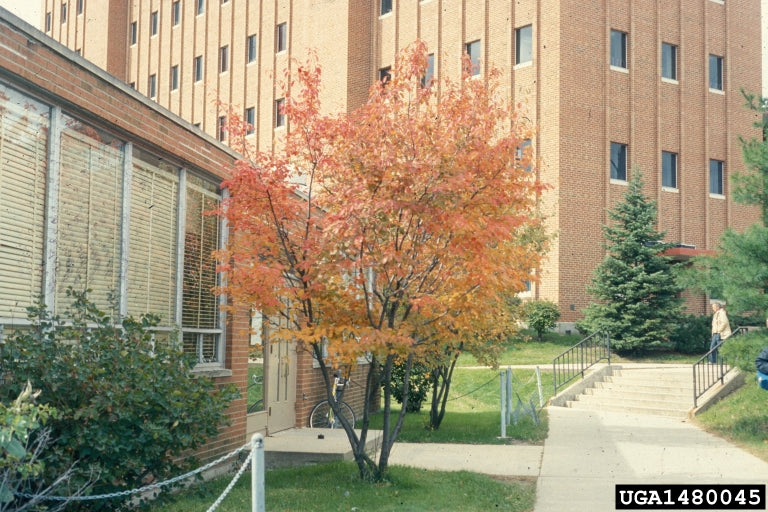
More: Amelanchiers are a keystone species (either a large shrub or a multi-stemmed small tree) and have high ecological value for numerous species of insects and animals. The fragrant flowers are an early pollen and nectar source. Squirrels, rabbits, deer, moose, mice, voles, fox, and black bear are some of the mammals supported by Amelanchiers. Birds supported include Cedar Waxwings, grouse, and woodpeckers. The berries, which develop in early summer and are called Juneberries, are food for over 40 species of birds and mammals, including humans who have used the berries in pies, jams, and wine-making, although the flavor and juice content of the berries can vary from tree to tree. The wood is hard and has been used for tool handles. Has been used medicinally. Attractive fall color, Will sucker but can be pruned to a single stem. To learn more about Amelanchiers see the entry for Amelanchier canadensis.
Amelanchier laevis can be distinguished by the reddish bark on its young growth. As the bark ages it turns gray, has a smooth texture, and develops vertical white stripes. The spring leaf flush has a lovely bronze-y tinge. According to Go Botany, this species has the most flavorful berries.
Even More: Naturally occurring and fertile crosses between Amelanchier arborea and A. laevis result in A. x grandiflora. These crosses have been commercially developed into numerous cultivars including 'Autumn Brilliance', 'Ballerina', 'Forest Pride', 'Princess Diana' and 'Robin Hill'. They have been developed for hybrid vigor, larger berries, specific form, and/or fall color.
Source: whips from Cold Stream Farm
Image credit: Close up of flower from Wikimedia Commons; Fall color courtesy of Richard Webb via Creative Commons through the North Carolina Extension Gardener Plant Toolbox