We are a local pickup only nursery. Please select location at checkout.
Honey Petal Plants
Amelanchier arborea - Downy Serviceberry
Amelanchier arborea - Downy Serviceberry
Couldn't load pickup availability
Sizes available: HPP #1
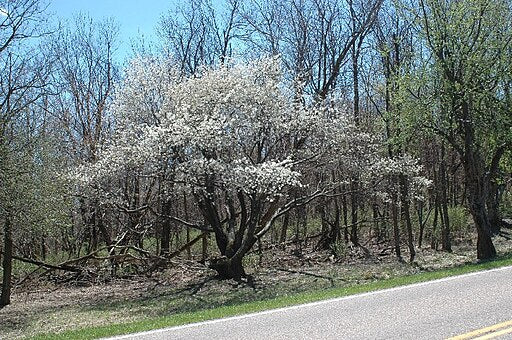
Basics: zones 4-9, full sun to part shade, 15-25' x 15-25', white bloom March-April, medium water needs to dry, prefers well-drained, acidic soil. Clay tolerant, but does not like limey soils. Can grow in quite a bit of shade but will bloom less. More drought tolerant than A. canadensis and A. laevis.
Common names: Downy Serviceberry, Downy Shadbush, Junebush, Juneberry, Shadberry, Service-tree, Shadblow, Sarvis-berry
Family: Rosaceae
Origin/Distribution: Found throughout eastern North America; native to Maine.
Habitat: Woodland edge, open and rocky woods, ridges, and ledges
More: Amelanchiers are keystone shrubs or multi-stemmed trees and have high ecological value for numerous species of insects and animals. The fragrant flowers are an early pollen and nectar source. Squirrels, rabbits, deer, moose, mice, voles, fox, and black bear are some of the mammals supported by Amelanchiers. Birds supported include Cedar Waxwings, grouse, and woodpeckers. The berries, which develop in early summer and are called Juneberries, are food for over 40 species of birds and mammals, including humans who have used the berries in pies, jams, and wine-making, although the flavor and juice content of the berries can vary from tree to tree. The wood is hard and has been used for tool handles. Attractive fall color, Will sucker but can be pruned to a single stem. To learn more about Amelanchiers see the entry for Amelanchier canadensis.
Amelanchier arborea is a preferred larval host for the invasive Gypsy Moth caterpillar (now called Spongy Moth), Lymantria dispar. It is distinguishable from Amelanchier laevis because of the soft down on the undersides of new leaves (hence the common name, Downy Serviceberry).
Even More: Naturally occurring and fertile crosses between Amelanchier arborea and A. laevis result in A. x grandiflora. These crosses have been commercially developed into numerous cultivars including 'Autumn Brilliance', 'Ballerina', 'Forest Pride', 'Princess Diana' and 'Robin Hill'. they have been developed for hybrid vigor, larger berries, specific form, and/or fall color.
Source: whips from Cold Stream Farm, 2025
Image credit: Wikimedia Commons