We are a local pickup only nursery. Please select location at checkout.
Honey Petal Plants
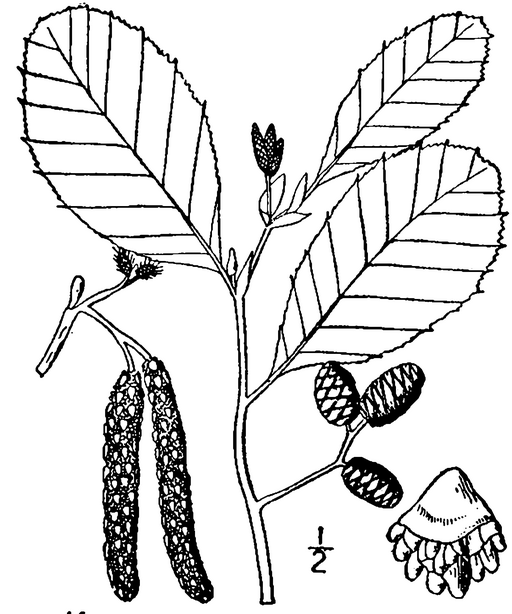
Alnus incana - Speckled Alder
Alnus incana - Speckled Alder
Couldn't load pickup availability
Sizes available: #1 (Trade gallon)
Basics: zone 2-6, sun to part shade, 10-40 feet high, flowers prior to leafing out in early spring, catkins and then cones, both male and female flowers on the same plant, tolerant as to soil type, nitrogen fixer, prefers wet-consistent moisture, but can adapt.
Synonym: Alnus rugosa, A. incana subsp. rugosa
Common names: Speckled Alder, Gray Alder, Tag Alder, Hoary Alder, Hazel Alder, Swamp Alder, River Alder, Thin-leafed Alder
Family: Betulaceae
Origin/Distribution: cooler northern hemisphere, Maine native
Habitat: Sunny wetlands: bogs, streams, borders of low-lying land, swamps. Most vigorous in full sun but can dominate an understory as well. Gaps created in wetland forests are quickly colonized. Often associated with Black Spruce (Picea mariana).
More: Beaver use speckled alder for dam and lodge construction. Alder thickets provide cover for birds and mammals. The seeds, buds, and catkins are eaten by birds including goldfinches, woodcock and grouse, and the young growth is browsed by moose, muskrats, beavers, and rabbits. Alder is a handsome native shrub and lends itself well as a structural element in large flower arrangements. It also has medicinal properties. Because of its fast growing nature it is useful for both erosion control and site rehabilitation. Speckled Alder is a nitrogen-fixing plant and therefore helpful for soil remediation on degraded sites. Yields of timber-producing stands are enhanced when grown with alders. This plant is monoecious and both the male and female catkins are decorative. Thicket-forming, but can be pruned. This plant can be used as livestock forage, kindling, smoking meat and fish. Has medicinal properties. Can hybridize with Alnus serrulata
Source: whips from Cold Stream Farm, 2025
Image credit: Wikimedia Commons